☢️ADVANCED ONLY: TAKE YOUR POINT CLOUD SKILLS TO THE REAL-WORLD FRONTIER!
Dear Perception Engineer,
If you've recently felt like your LiDAR skills were a bit too "rookish", meaning you have a good understanding of the algorithms, but still feel a certain gap with engineers from real autonomous tech companies, then this page will show you how to close it.
Here's the idea:
You've taken my course POINT CLOUDS CONQUEROR, and learned about point cloud processing, thresholding, 3D Object Detection, 3D Segmentation, alignment, LiDAR types, surface reconstruction, feature thresholding, and many more algorithms they use in the field...
This is what POINT CLOUDS CONQUEROR is about: LiDARs & 3D Perception algorithms.
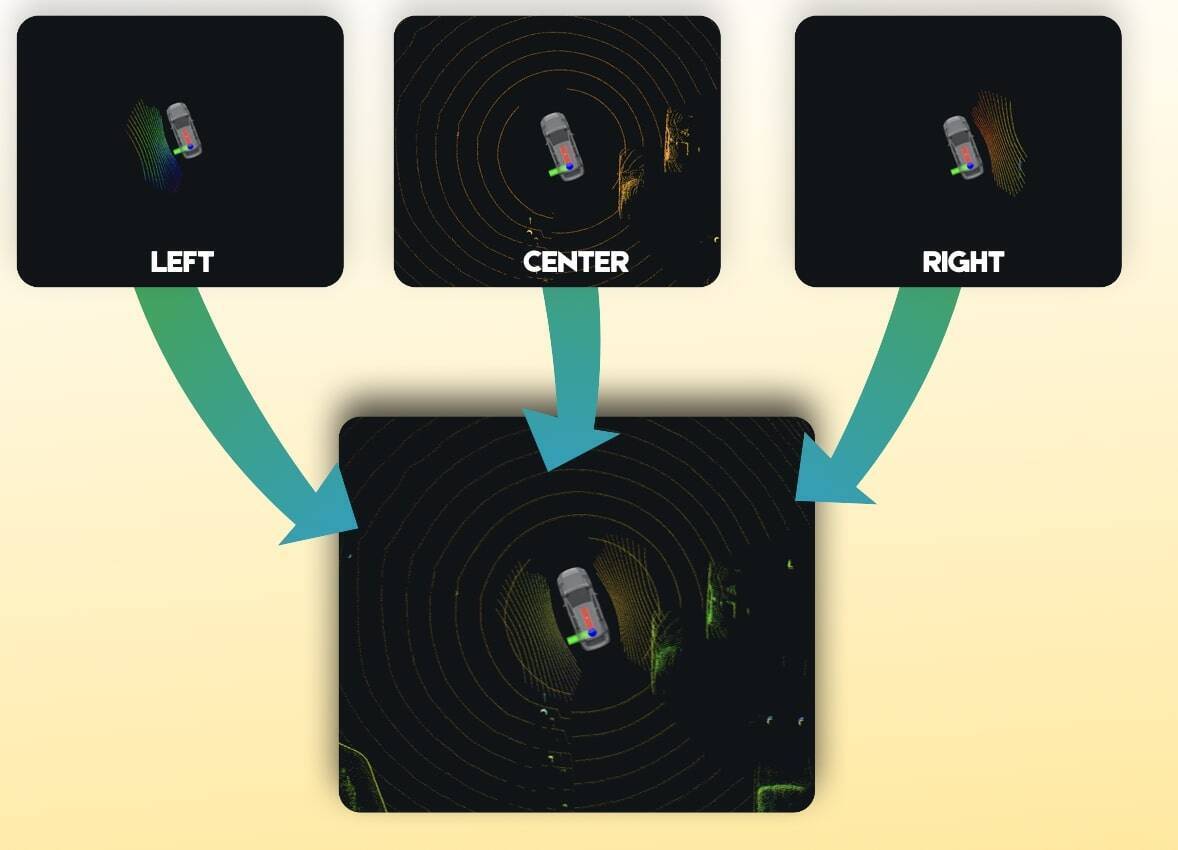
But in the field, companies like Waymo don't just use LiDARs and plug them to algorithms... They actually use 5 LiDARs, of different types, sizes, dimensions, each calibrated differently, and running different types of algorithms...
When working solely on a perfectly prepared 360° point cloud, you introduce a natural distance with the real world, and their constraints...
I mean, do you realize that if you have a Velodyne giving you 20,000 points per second, and an Ouster OS1 giving you 200,000 points per scan... any preprocessing you'll do on the Ouster will take 10x longer?
Think about all the synchronization issues it can provoke...
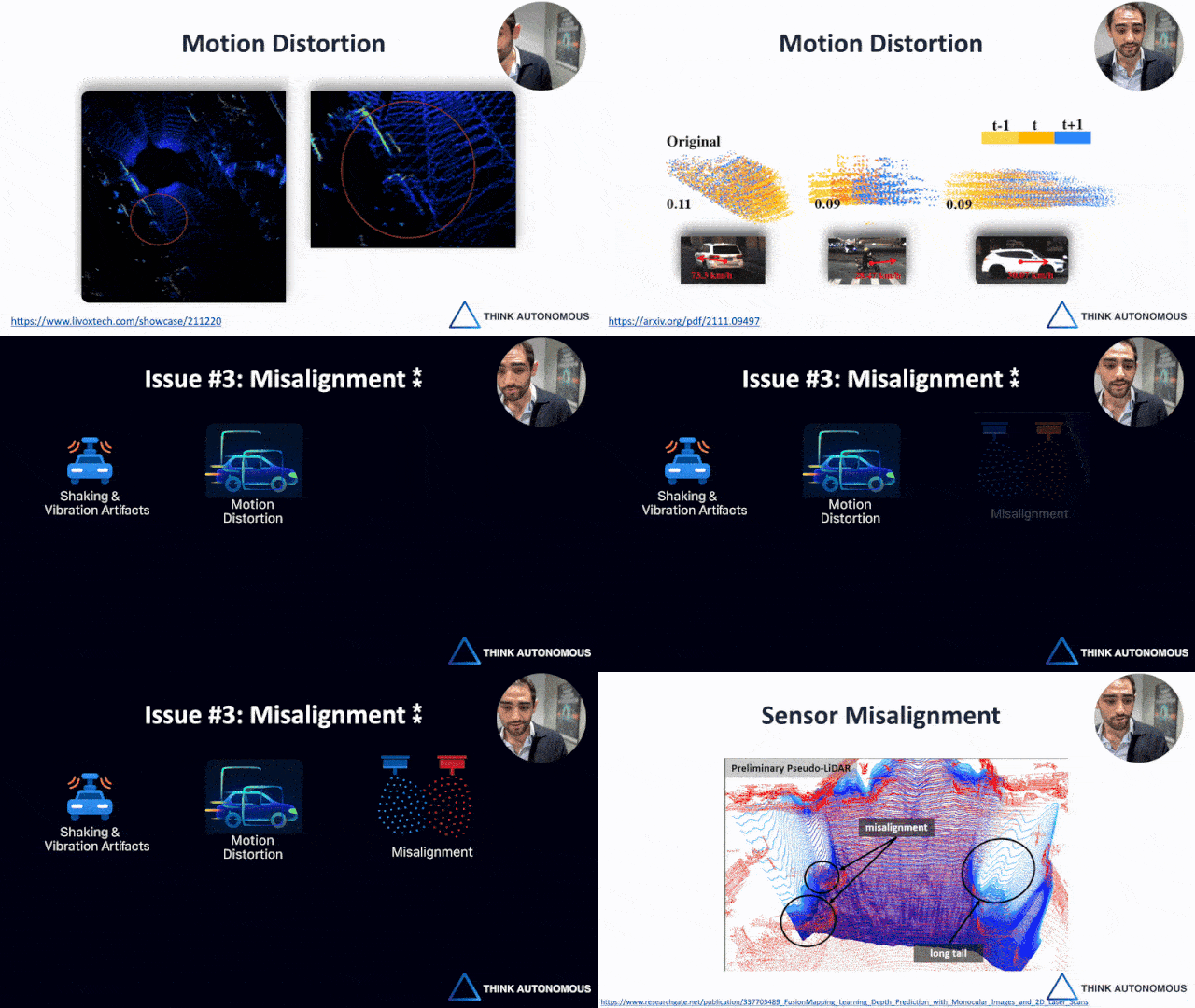
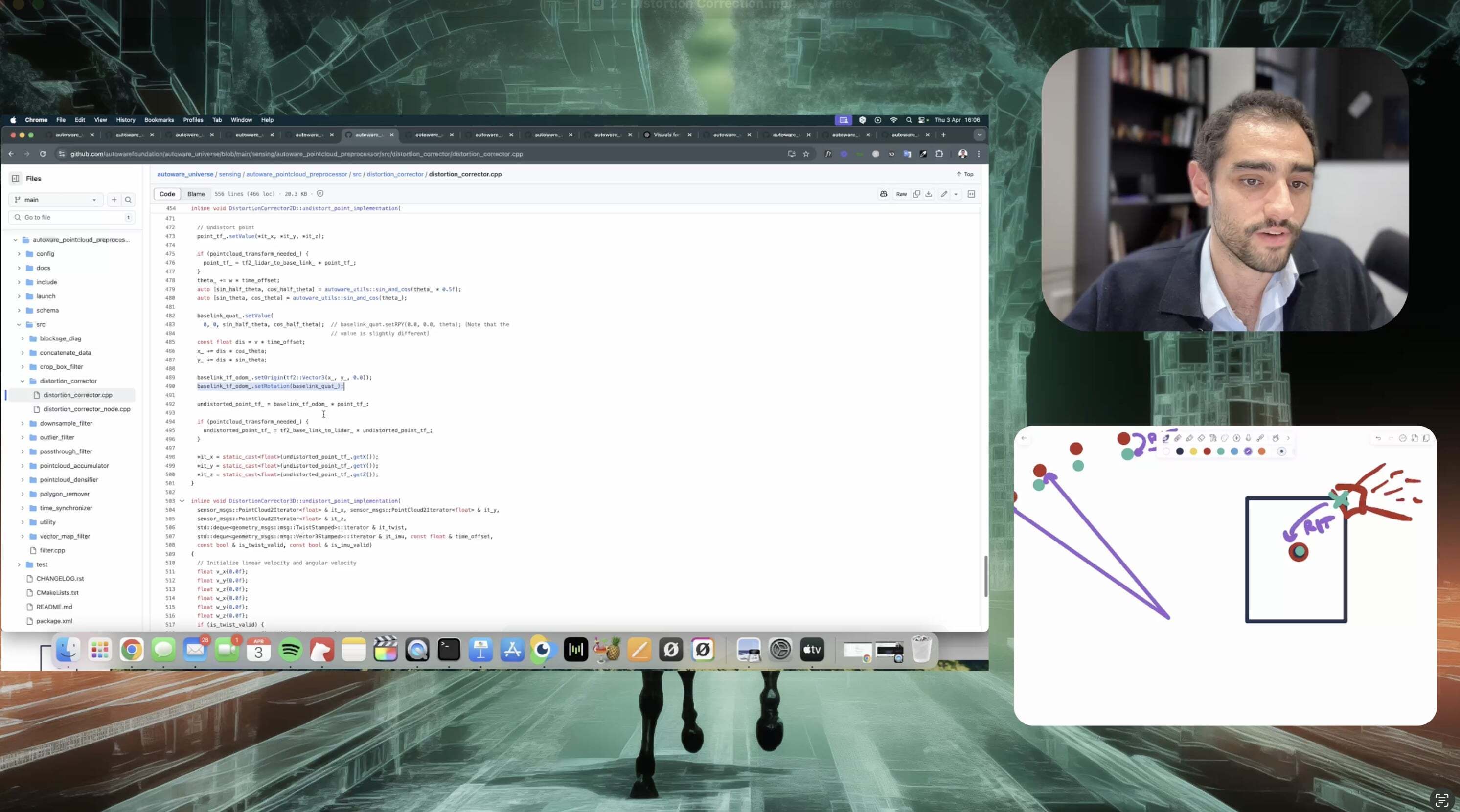
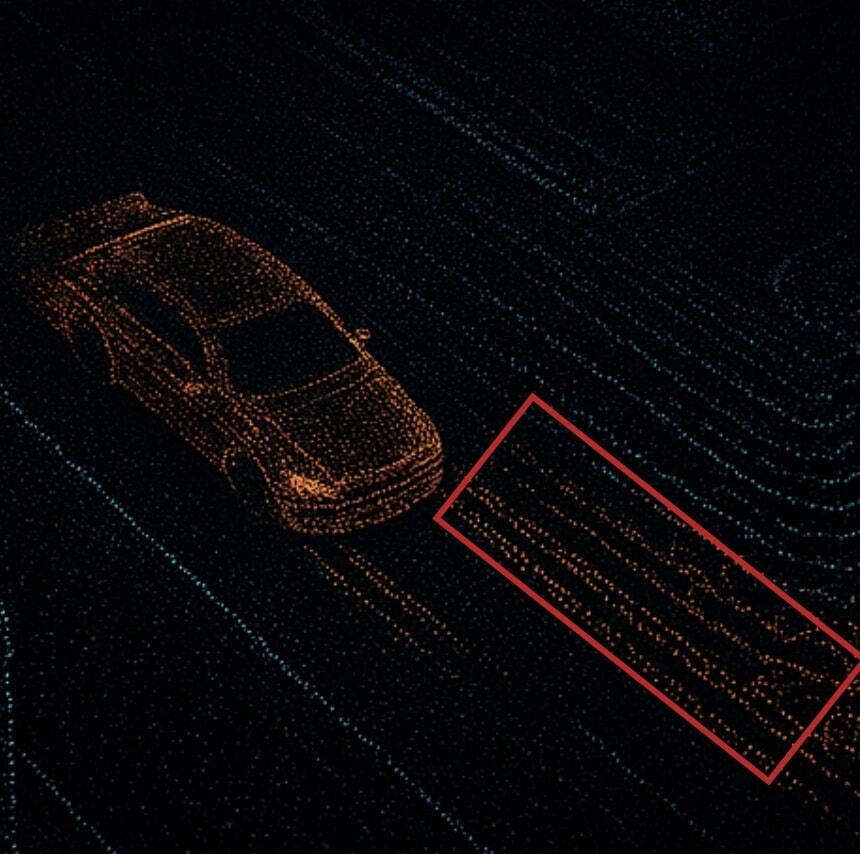
And did you know that if your car drives faster than your mechanical LiDAR rotates, you can get a distorted point cloud?
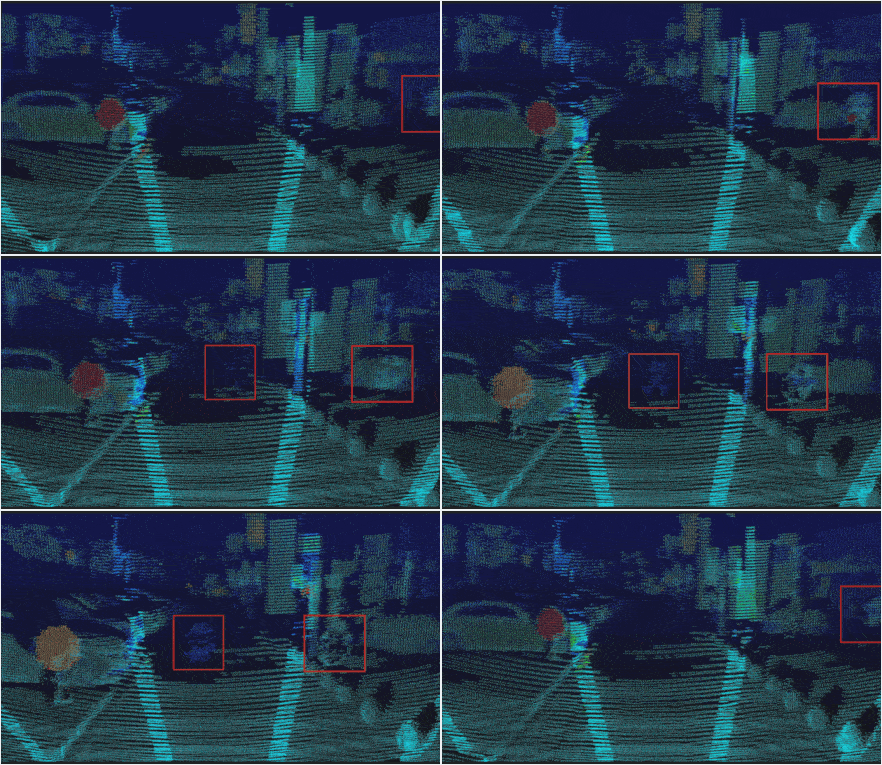
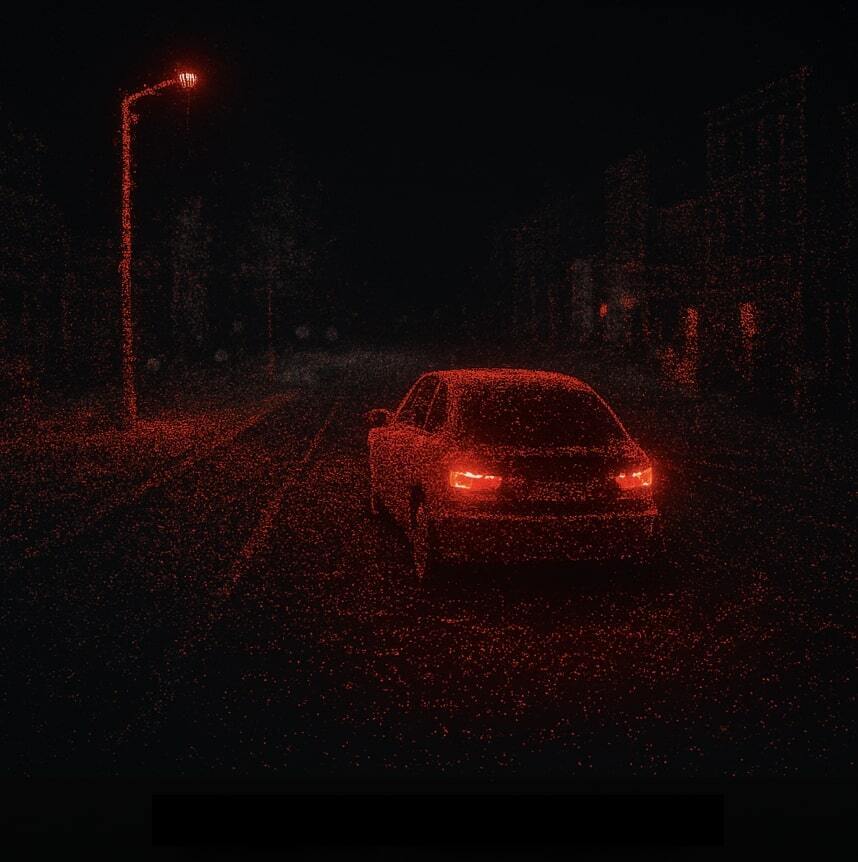
Or that some traffic signs can create so much reflectivity that you could see ghosts?
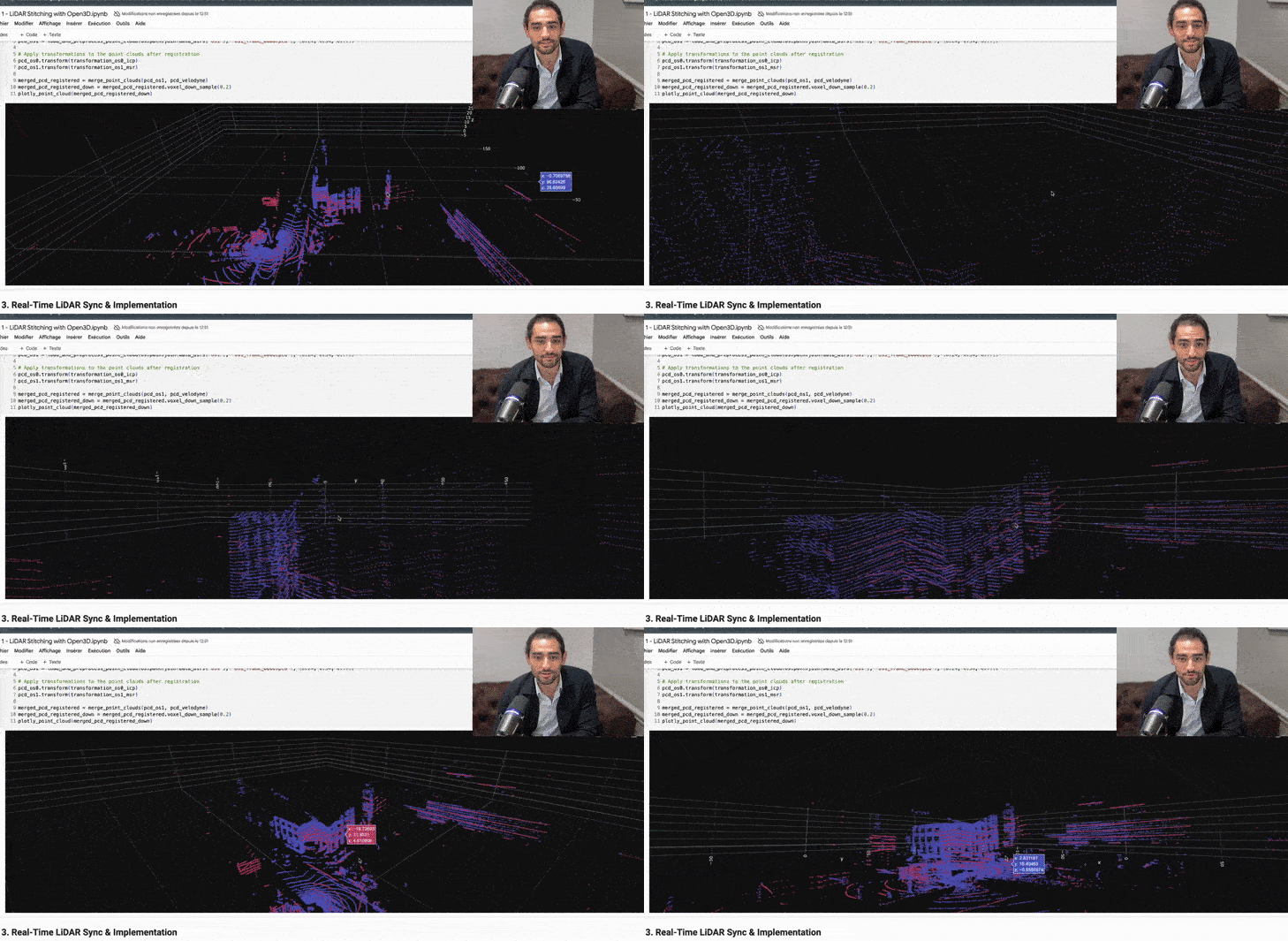
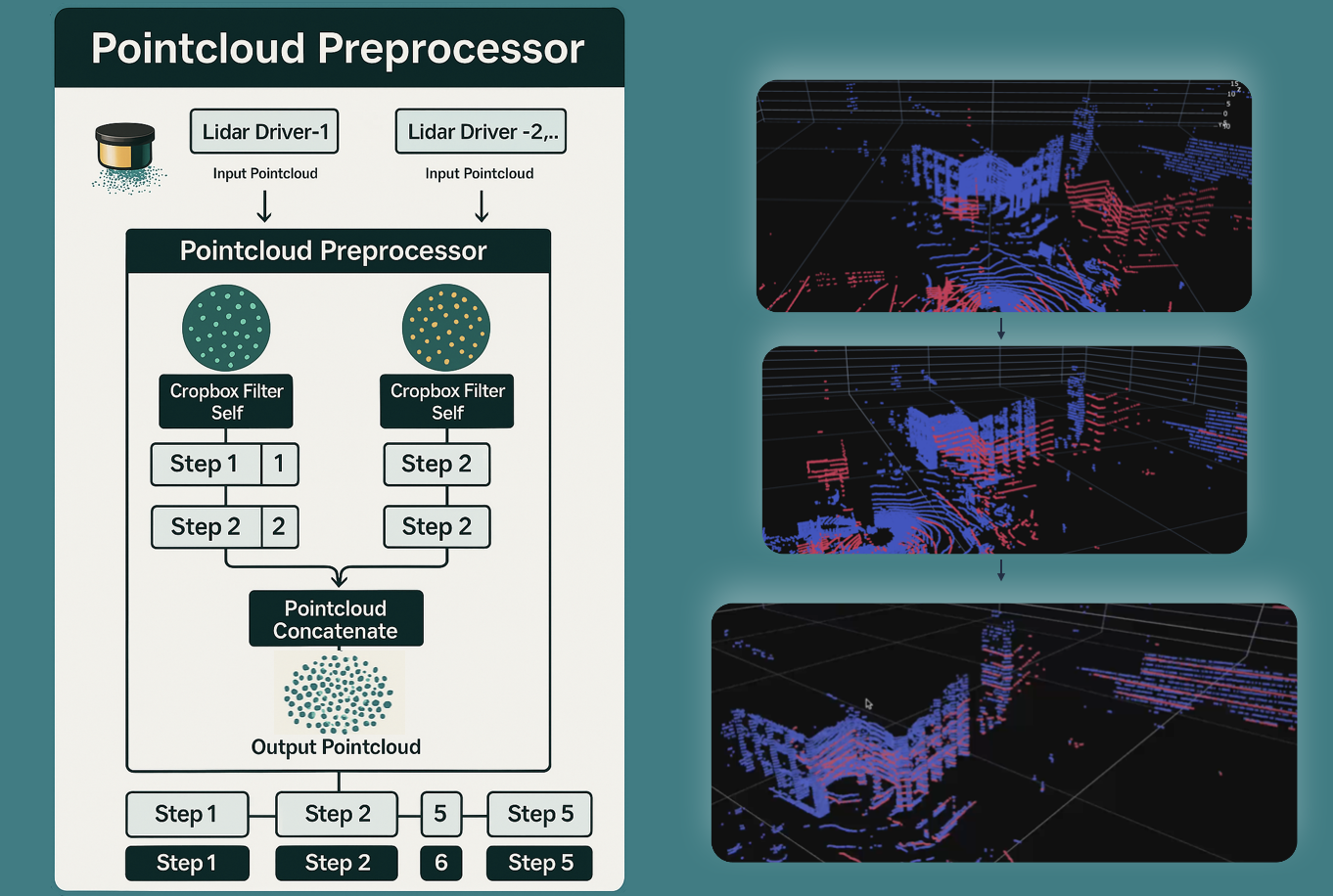
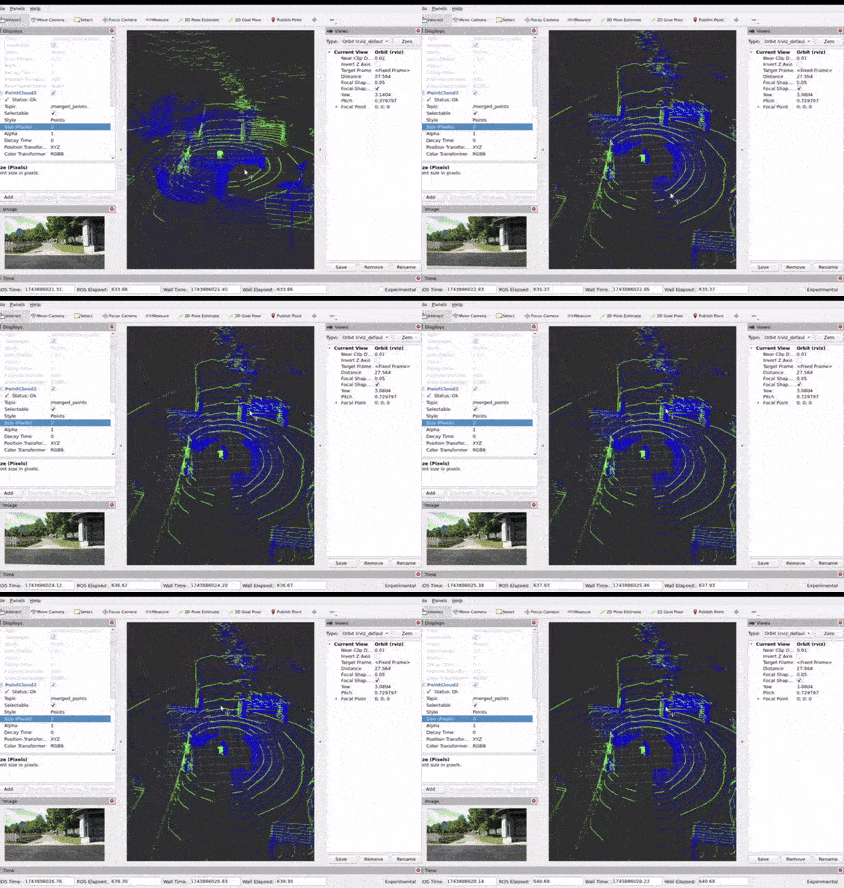
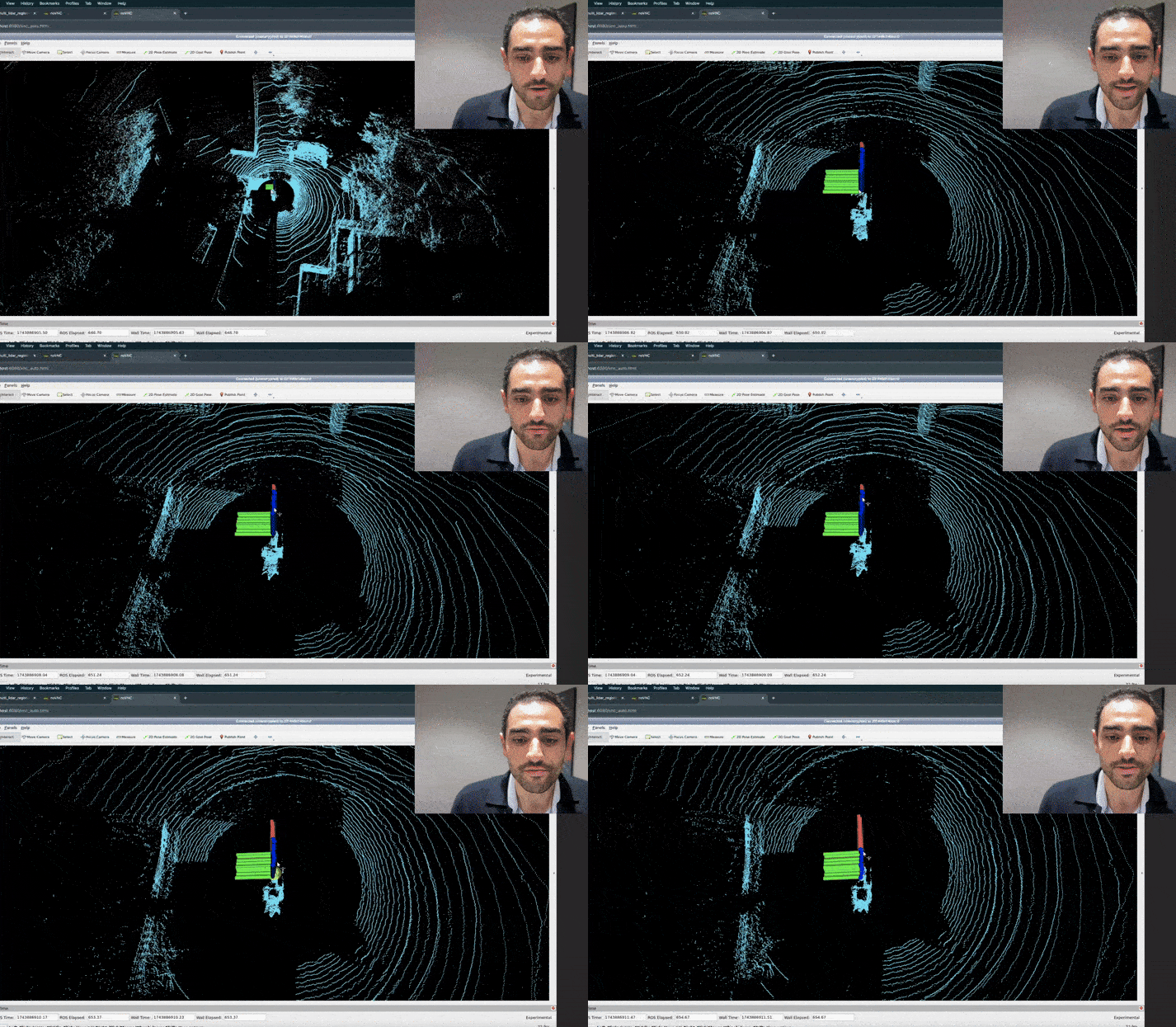
DEMO: This is what you typically get when you're using several LiDARs
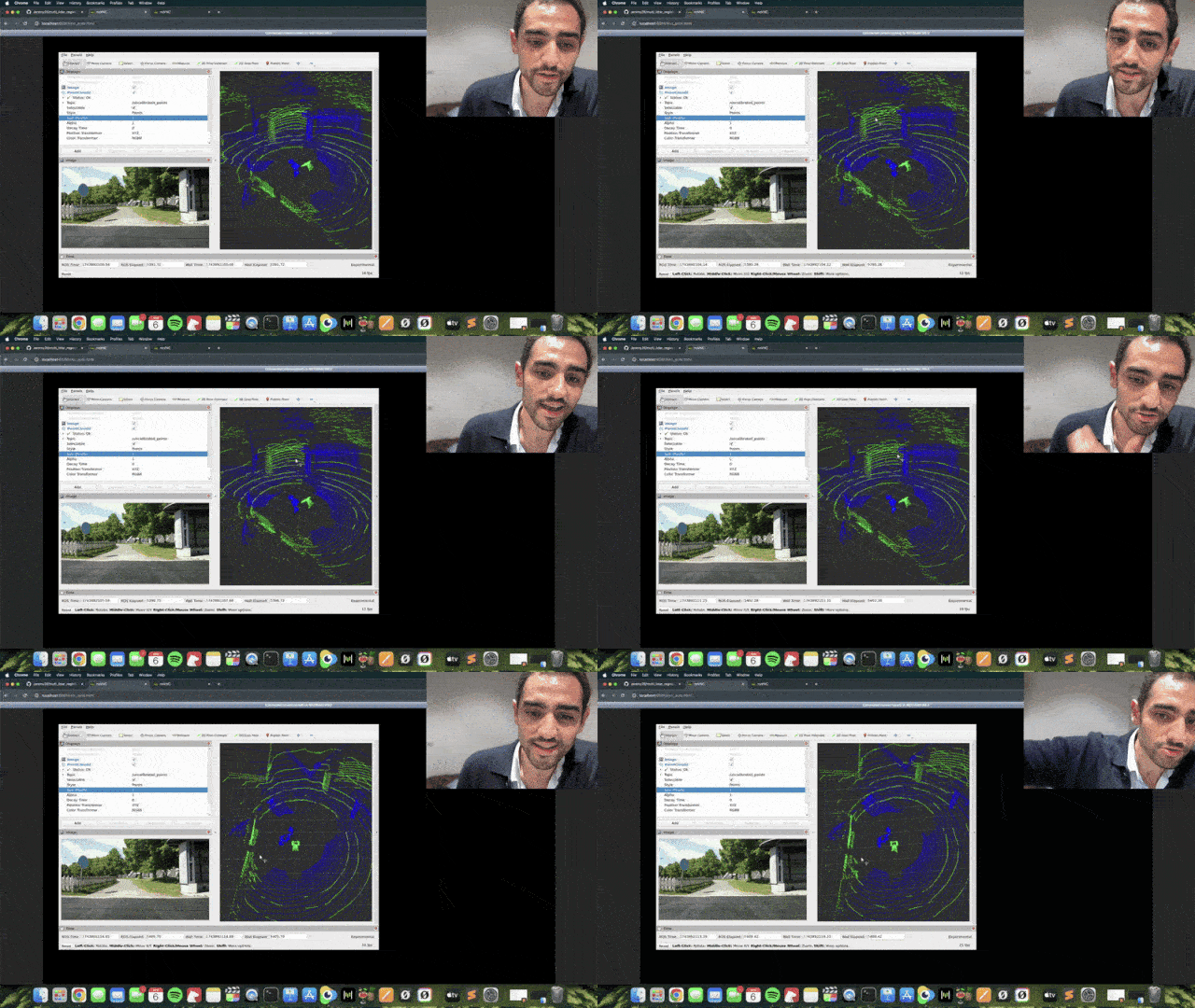
Unaligned point clouds, the same objects shown twice, overlap, different shapes, forms, sizes, intensities, it's all very messy...
When hiring you, companies expect you to have a solution for these problems. This is the real world, it's imperfect, it's ugly, it's hard... and if you want to lead that world, and work as a LiDAR Engineer, then you'll need to know about the...