The LiDAR PACK is OPEN to help you target Perception / Physical AI Jobs!

3D Machine Learning, Sensor Fusion, 3D Deep Learning

Get the LiDAR PackTotal Value: 1,441€
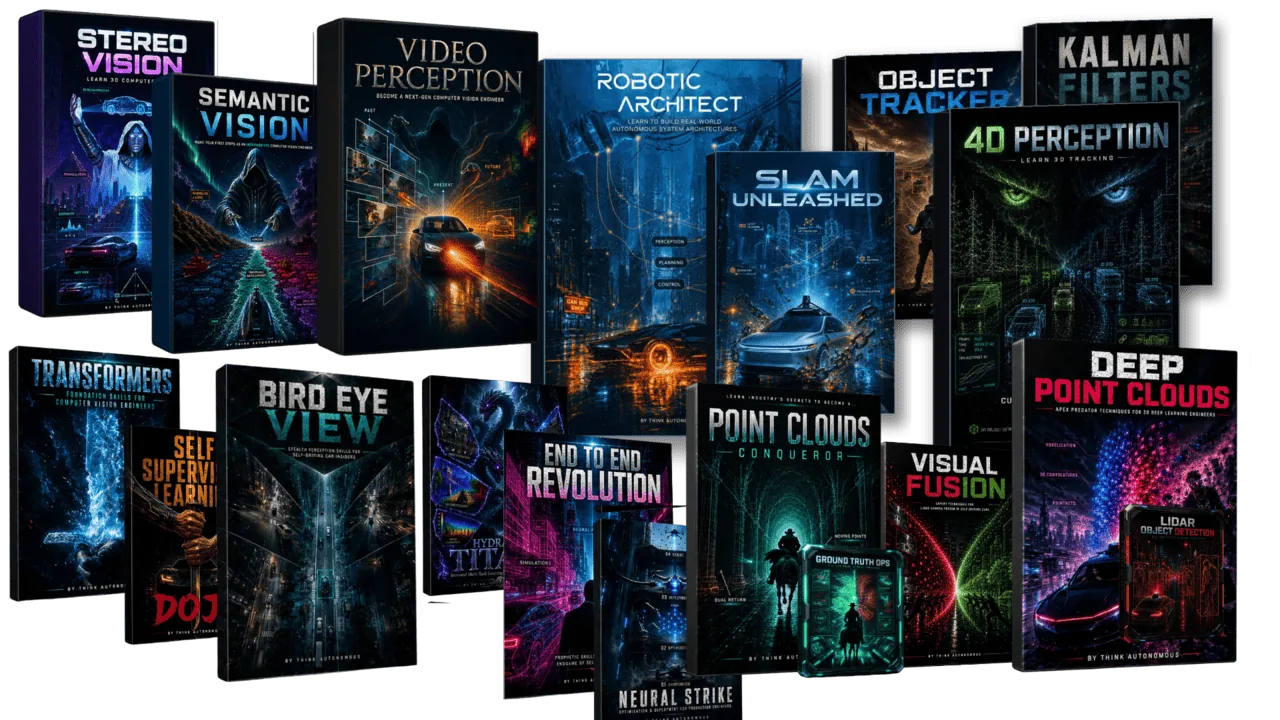
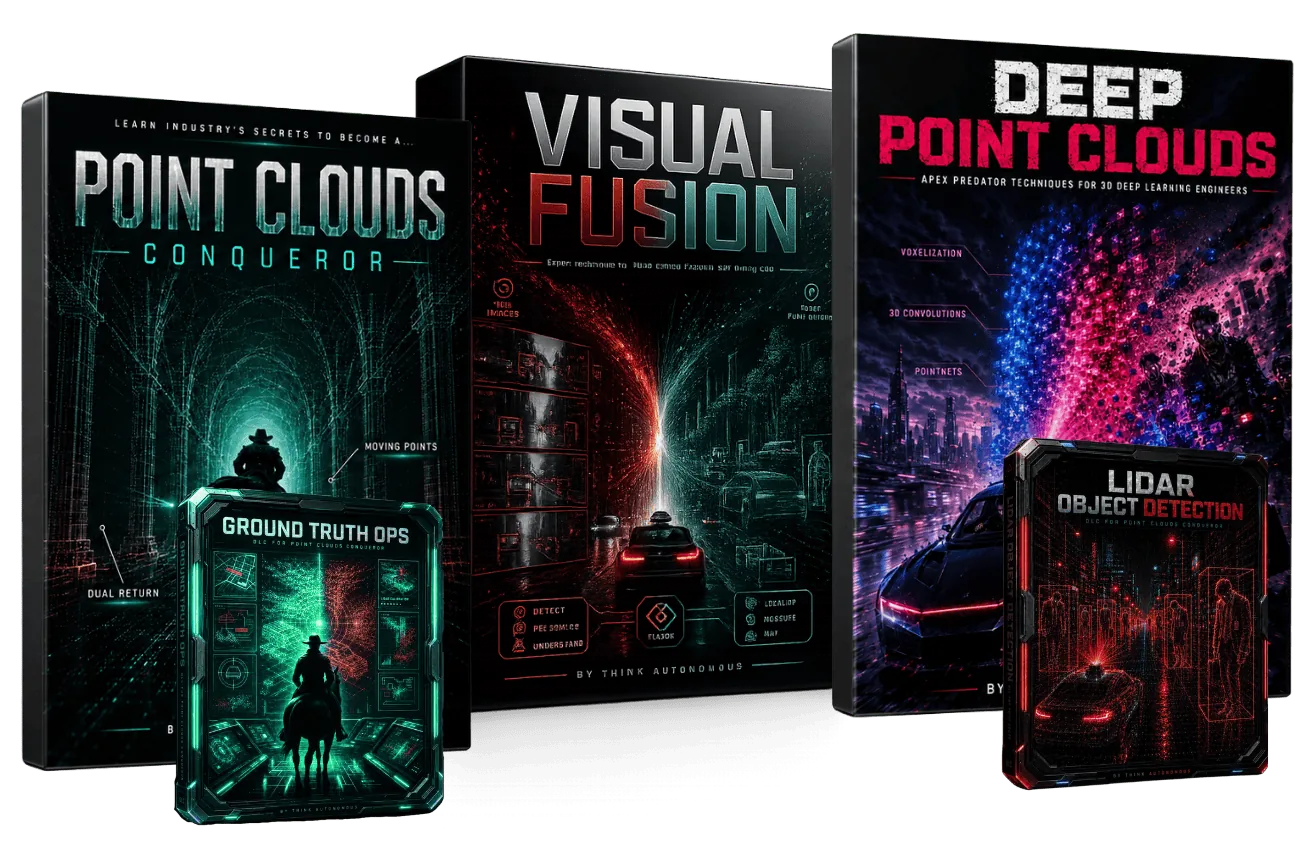
The LiDAR Pack: Point Clouds Conqueror, Ground Truth Ops, Visual Fusion, Deep Point Clouds, LiDAR Object Detection

Let me tell you about one of the most edgy skills of the Robotics industry...

LiDARs!

From: Jeremy Cohen

If you're interested in joining the next wave of Engineers working on Robotics, Perception, Physical AI and Self-Driving Cars, then this page will show you how.

Here's the story:

Over the last 8 years, I built year after year courses on the LiDAR industry, that I have updated, taught inside the biggest companies like Mercedes-Benz R&D division, and am now releasing all together in their 2026 version as the ultimate Pack to learn LiDARs.

How do I know it's ultimate?

Because 2 years ago, I created a LiDAR Engineer mindmap that was downloaded over 3,000 times and reshared tens of thousands of times on LinkedIn. The entire industry 'approved' its positioning of the skills it contained, which were roughly:

LiDAREngineer

This is the Map to being a Perception Engineer via the LiDAR Road.

Hundreds of companies are hiring on LiDAR right now, and they want people who have these skills.

This is why, I have put together all my courses that teach these skills into one ultimate bundle: the LiDAR Pack.

Here's what's inside...

A look inside

A LOOK INSIDE THE LiDAR PACK

The LiDAR Pack

The LiDAR Pack is a collection of 5 courses taking you from Zero to Hero in LiDAR. You don't need any LiDAR knowledge to get started, but look at where this is going to take you...

01POINT CLOUDS CONQUEROR & GROUND TRUTH OPS course cover

LIDARS & POINT CLOUDS PROCESSING

POINT CLOUDS CONQUEROR & GROUND TRUTH OPS

In this first 2 courses of the series, you'll get a complete introduction to LiDAR sensors, and then build multiple projects on topics like 3D Object Detection, Point Clouds Segmentation, Multi-LiDAR Fusion, and more...

POINT CLOUDS CONQUEROR is the perfect introduction to LiDAR beginners, and GROUND TRUTH OPS is the 'pro' specialization for engineers who took the first course.

What you get after taking the POINT CLOUDS SERIES

3D SEGMENTATION PROJECT: How to do 3D Segmentation on point clouds (we'll see techniques like the RANSAC algorithm, but also a few others that got very successful in the industry)
How to implement ghost, features, and region filtering on Point Clouds (including how to build a "bubble of security" to break a self-driving car if any object, even unclassified, ever comes within a radius of a car)
3D LANE PROJECT: Use LiDAR's Reflectance Properties to identify traffic signs and lane lines, and build a 3D lane line detector

But also:

  • The 10 Most Important 3D Machine Learning Algorithms every LiDAR Engineer must know, (and the most important of all in autonomous driving)
  • Why traditional Outlier Removal Techniques don't work with multiple LiDARs, and 3 advanced techniques used in production to remove noise & ghosts
  • A specialized deep dive into the C++ code of 10 algorithms used in professional LiDAR pipelines
  • Learn how to "prepare" a point cloud to be fed to SLAM algorithms like KISS-ICP, and a step-by-step guide to do it yourself (when you simply run a github package on a raw LiDAR point clouds, you get very poor results, we'll see how to tackle this)
  • The #1 filter every self-driving car wants to apply (and the 3 second most important ones)
  • A Step-By-Step Instruction to run a Multi-LiDAR Processing Pipeline in 5 minutes or less on your computer (without any setup, we made the ROS part extremely simple to do, all you'll need is 3 command lines in a terminal)
  • Understand how the most popular algorithms such as ICP or NDT work, and get a deep dive into the maths of generalized registration.
  • How to use a LiDAR with ROS (including 2 demos of Self-Driving Car ROS Recordings used with LiDARs)
  • 12 Types of Point Cloud Features you can use to collect relevant information, even if your LiDAR is only a 2D XYZ LiDAR (we'll do an advanced module on feature extraction, both in Python and C++)
  • and many, many more; like for example:
3D DETECTION PROJECT: How to use unsupervised learning to fit 3D Bounding Boxes to objects, and how to "predetermine" a bounding box based on your Point Clouds shape
Inside a Professional Multi-LiDAR Fusion Pipeline, and the #1 most used LiDAR Alignment technique
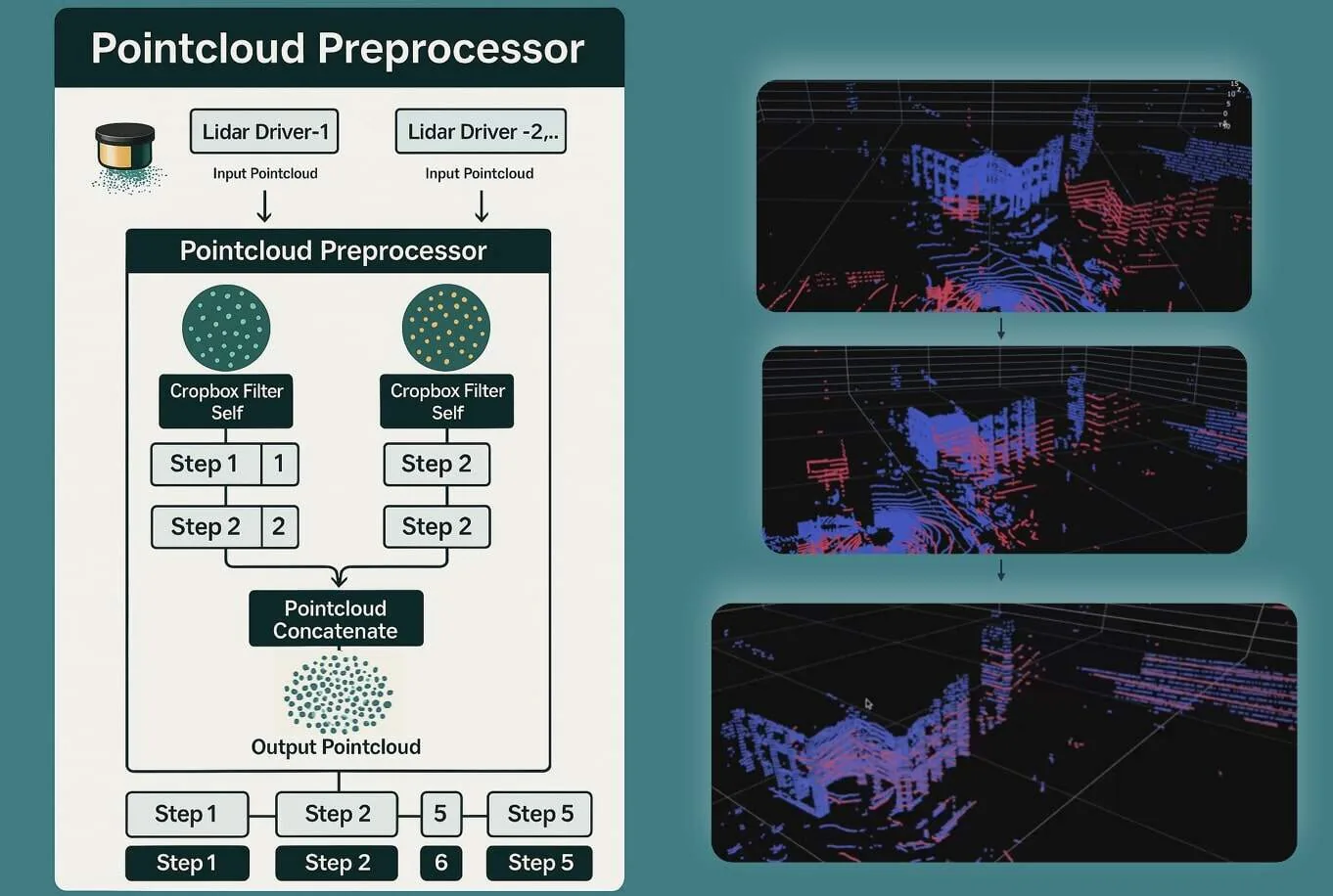
LIDAR FUSION PROJECT: Implement a complete pipeline to fuse multiple LiDARs together and build a realistic visualizer (in this workshop, you'll also learn about the metrics and right/wrong ways to know if your algorithms are effective)
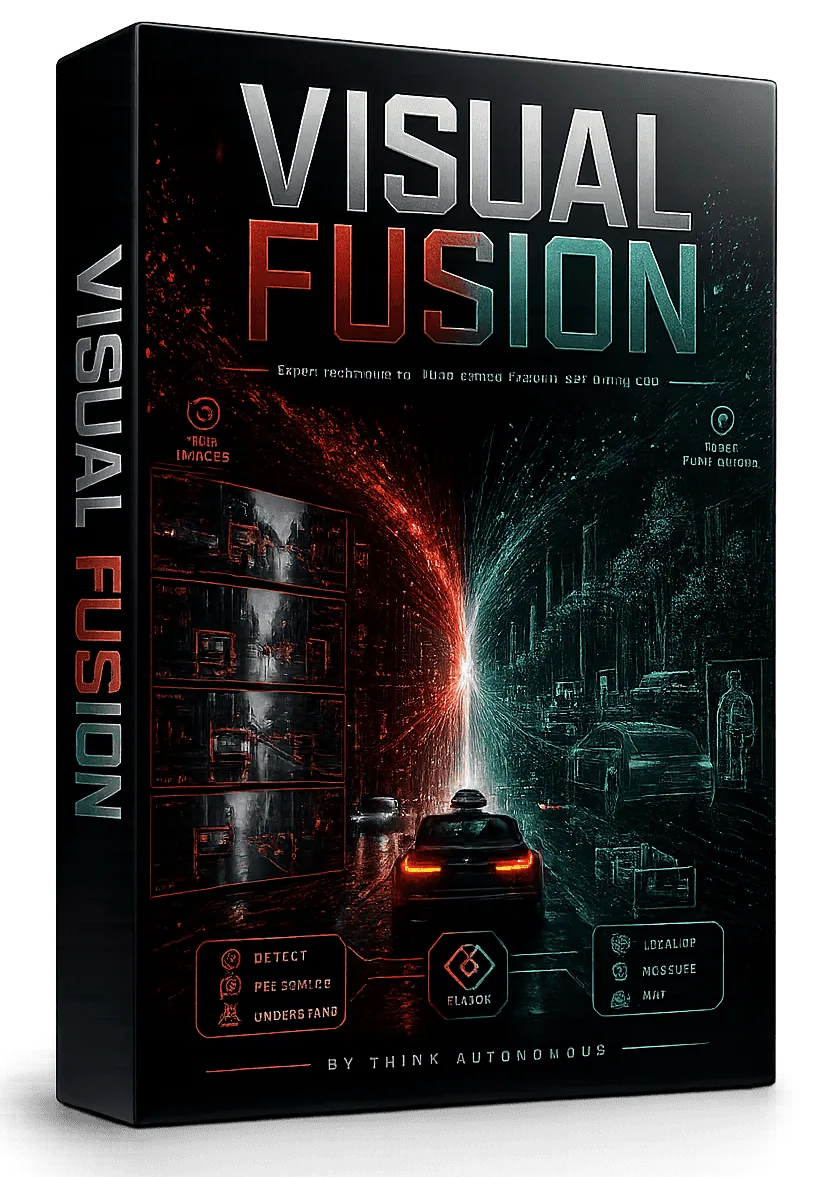
02VISUAL FUSION course cover

LIDAR CAMERA FUSION

VISUAL FUSION

The next course is a strong focus on Sensor Fusion; in particular between LiDARs and Cameras. Inside, you're going to learn concepts like Early Fusion, Late Fusion, and more...

What you get after learning VISUAL FUSION

  • The 3 magic little steps to implement the Point-Pixel Fusion algorithm 80% of robotics and self-driving car companies use (project, detect, fuse)
  • How to read a self-driving car sensor architecture diagram (including how to position sensors, where to position them ideally, what model of camera should you use in a self-driving car, ...)
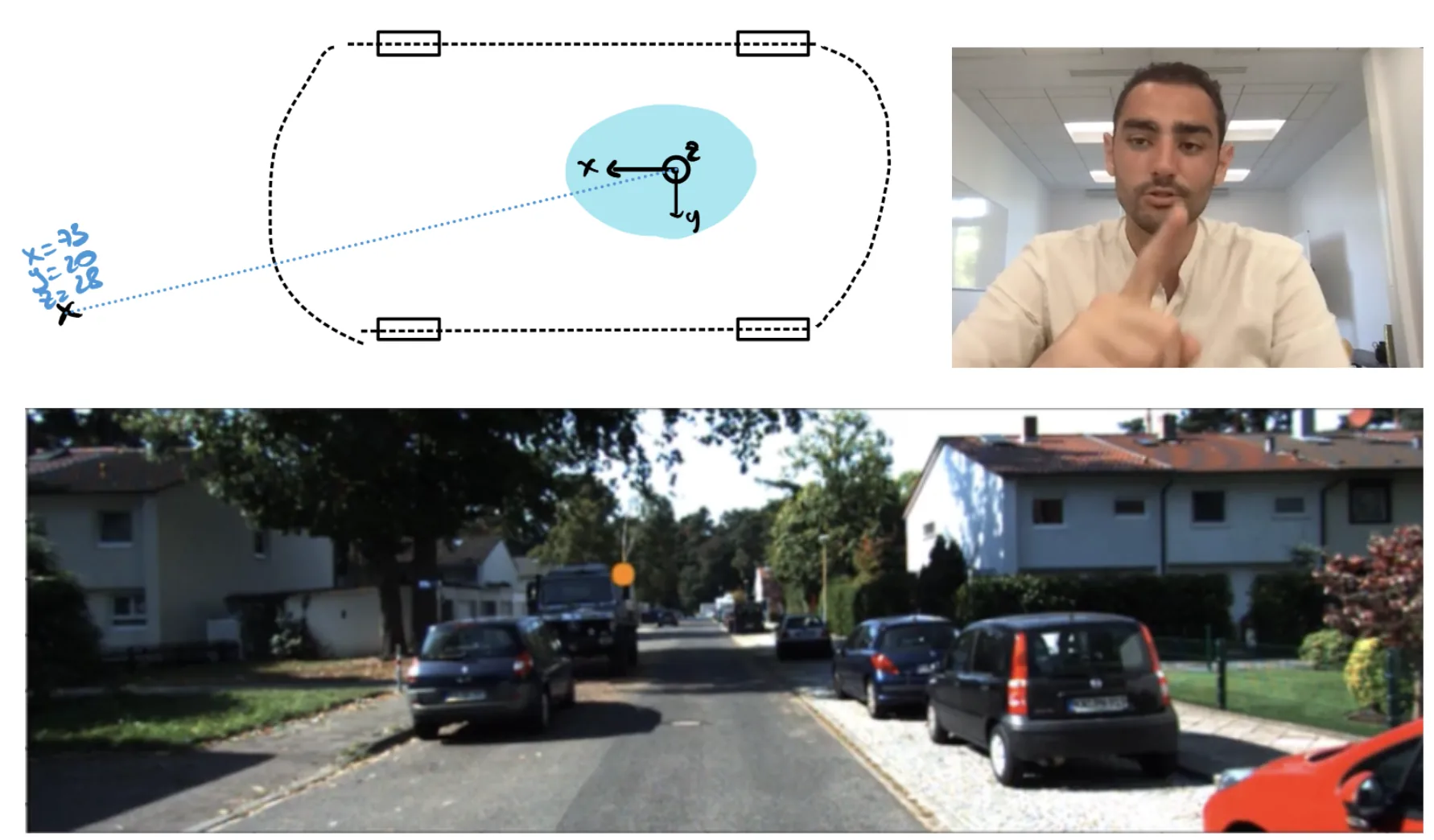
  • A "MAGIC FORMULA" to project a 3D Point from any LiDAR to a 2D Image coming from any Camera. (That formula works in most cases, but not all of them, so I also included in the code a REVERSE MAGIC FORMULA that will work in 100% of the cases. 🙃)
  • Early vs Late Sensor Fusion: How to select a Sensor Fusion algorithm and what are self-driving car companies using.
  • 3 overlooked camera fundamentals most engineers don't use that could 10x their potential and transform their Computer Vision Engineer position.
  • How to build a LiDAR/Camera Fusion cost function (and how to optimize a late fusion algorithm using Kalman Filters).
  • How to physically scale a Sensor Fusion architecture using Satellite Fusion to use more LiDARs and more cameras without increasing the weight and computation power.
  • Exactly how to do the maths needed for 3D-2D PROJECTIONS. (We'll look at every matrix cell by cell and understand it so deeply that you'll become autonomous on LiDAR Camera projections; no matter the sensors.)
  • and many, many more
POINT PIXEL FUSION PROJECT: Inside the manufacturing of a self-driving car Early Fusion Algorithm
The exact code to project ONE LiDAR point to a camera image.
3D PERCEPTION: Fuse Bounding Boxes from multiple devices to build a complete perception pipeline

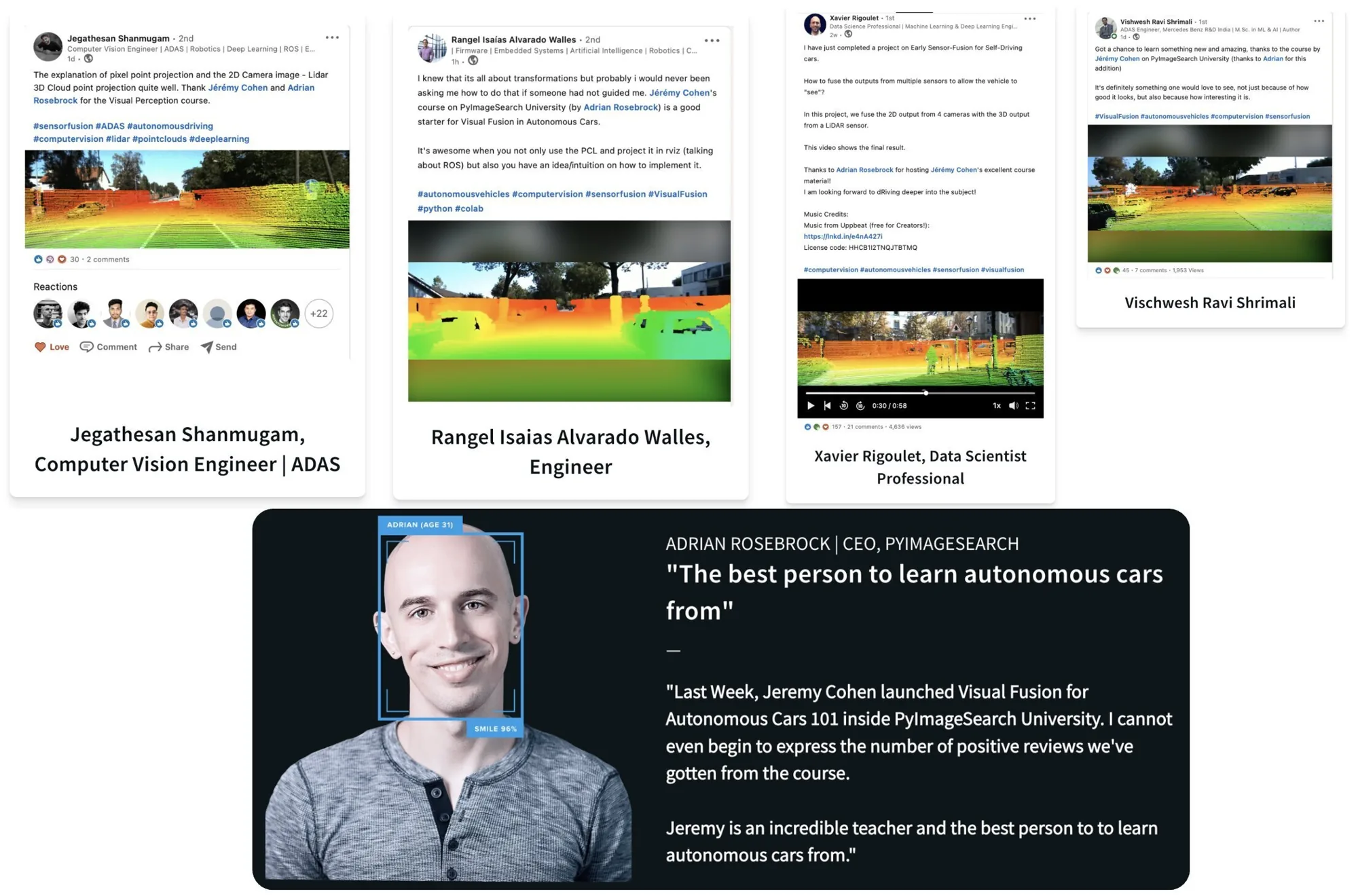
Testimonials from Visual Fusion

Testimonials from Visual Fusion students
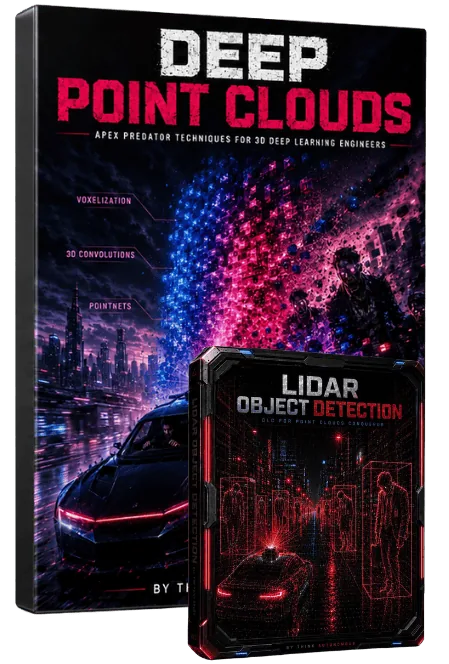
03DEEP POINT CLOUDS & LIDAR OBJECT DETECTION course cover

3D DEEP LEARNING

DEEP POINT CLOUDS & LIDAR OBJECT DETECTION

Finally, the 3D Deep Learning Series is going to complete your journey to LiDARs with a Deep Dive into Deep Learning for Point Clouds. You'll learn about Point based 3D Deep Learning, Voxelization & 3D CNNs, and 3D Object Detection.

What you get after taking the 3D DEEP LEARNING courses

The 2 competing approaches to 3D deep learning that divide the entire industry (point-based vs. voxel-based, you need to know both, and when each one fails)
Why 3D CNNs often outperform point-based networks, and the layer depth sweet spot (go deeper and you're just burning compute for no gain)
Engineer a complete voxel-based classifier end-to-end (point cloud → voxelization → 3D CNN → classification, ready for your portfolio)
  • Why Occupancy Networks are overhyped, and the one use case where they actually outperform traditional voxel approaches (most engineers get this backwards)
  • The 'almost unknown' sparse computing trick that avoids wasting 90% of your compute on empty voxels (standard convolutions multiply with zeros constantly, this optimization is how production systems stay fast on millions of point clouds)
  • Visualize what 3D CNNs actually learn (we'll examine feature maps layer-by-layer so you understand what the network 'sees')
  • Implement PointPillars's Voxel Encoding Layer (this feature extraction technique is used in every modern 3D object detector, understand it and you can get many perception codebases)
  • Step-by-step implementation of Sparse Convolutions from scratch (not using a library, you'll code the indexing logic that makes production voxel networks 10x faster)
  • The real reason PointNet fails on large outdoor scenes, and how PointNet++ solves it with hierarchical sampling (this is what Autoware's CenterPoint algorithm actually uses)
  • Build a strong understanding of 3D Object Detection architectures, and build hands-on experience with multiple 3D detectors
  • Implement your own Anchor Box Generation algorithm, and test it to detect and track Flying Aircrafts.
  • An in-depth exploration of the Point-RCNN algorithm (this algorithm is one of the top algorithms used in LiDAR Object Detection)
  • A hardcore technical understanding of the fusion process between points and voxels, and how to "PointNet-ise" any voxel.
  • and many more... like:
How to design, train, and run ANY 3D Object Detector algorithm in minutes, in a Jupyter environment, with active 3D Visualization
The Magic Formula of 3D Object Detection: Assemble 11 Blocks together to build ANY modern detector
The secret behind Region Proposal Networks and how to use Anchor Boxes in Neural Networks to generate Bounding Box Coordinates in 3D
What students say about Deep Point Clouds

This series of courses takes you from complete beginner to advanced in LiDARs.

HOW MUCH IS THE LIDAR PACK WORTH?

POINT CLOUDS CONQUEROR299€
GROUND TRUTH OPS199€
VISUAL FUSION249€
DEEP POINT CLOUDS495€
LIDAR OBJECT DETECTION199€
VALUE1,441€
LIDAR PACK899€

If you go to my website, and check each course one by one, you'll reach a total value of 1,441€. This is NOT what you're going to pay, because you benefit from the exceptional bundle discount. So here are the offers:

Essential

LiDAR Pack

The LiDAR Pack
  • POINT CLOUDS CONQUEROR [299€]
  • GROUND TRUTH OPS DLC [199€]
  • VISUAL FUSION [249€]
  • DEEP POINT CLOUDS [495€]
  • LIDAR OBJECT DETECTION DLC [199€]

Value: 1,441€

Today: 899€

UNLOCK THIS OFFER

* 3 or 5 time payment available

Pro

LiDAR Pack PLUS

The LiDAR Pack PLUS
  • Everything in the LiDAR Pack [1,441€ value], PLUS:
  • A Year of Edgeneer Land Membership + All Existing Fragments [1,997€ value]
  • 2 portfolio project critiques by Jeremy (ideally set apart in time) [600€ value]

Value: 4,038€

Today: 1,399€

UNLOCK THIS OFFER

* 3 or 5 time payment available

All In

The Mega Pack

The Mega Pack: every Think Autonomous course
  • Everything in the LiDAR Pack [1,441€ value], PLUS
  • Computer Vision Pack [1,440€ value]
  • The Tracking Pack [923€ value]
  • The Robotics Pack [644€ value]
  • The Advanced Deep Learning Pack [1,820€ value]
  • Edgeneer Land Membership & All Fragments [1,997€ value]
  • 2 Portfolio project critiques by Jeremy [600€]

Value: 8,965€

Today: 3,997€ only

UNLOCK THIS OFFER

* Installments of 3, 6, or 12 payments are available

FAQs

What is the format of the courses?

Each course is a home-study course with immediate access. Each lasts between 5 and 10 hours, depending on if you want to go the quick road and simply understand the skills and build projects, or invest time mastering the craft and building more expertise. Most lessons are text and video based, coming with hands-on projects.

Can I ask you questions if I'm stuck?

Yes, these courses (like all my courses) is hosted on our 2.0 platform, optimized for support, answers, and community learning. You might very well ask questions there and get very quick answers from me or other students.

Can I get all the bonuses if I already bought the Pack 3 years ago?

Very likely not. We never released the pack in this exact state with all of these courses. If you got a LiDAR Pack in 2022 for example, all the courses there are now discontinued and were replaced. If you got one in 2024, it's very likely that you didn't get any DLC and that the price was different than today.

What are the prerequisites?

This pack is a "Zero-To-Hero" kind, but it still requires abilities with:

  • Coding in Python
  • Knowledge of Foundation Deep Learning (Neural Networks, Backpropagation, CNNs for Image Classification / Level 1)
  • CNNs up to Object Detection: We won't recover Level 1 CNNs (image classification, basic MNIST classifiers etc...) so you should know that part
The price is too high for me...

Then go with the instalments. I made sure that there is no real obstacle between you and learning. The real question is... are you ready to make a drastic change in your skills and become a different type of engineer than you are today? Are you ready for change?