Neolix AI Deployment Head Explains how they use End-To-End and MASS PRODUCE Autonomous Delivery Shuttles
There is an effect I love in Avengers, it's to see the heroes struggling movies after movies, to defeat Loki, Ultron, then the Ragnarok... only to find out, when they can finally rest, that Thanos hasn't even entered the arena yet. Suddenly, the previous fights appear meaningless compared to this whole new boss.
I observe this exact effect in autonomous delivery and shuttles. We see companies in the US and Europe going through years of buildup, billions raised, hard-fought regulatory battles, milestone after milestone, celebrating 100,000 miles driven, then 200k, then a growing fleet of 50... 150... 1,000 vehicles... but this appears RIDICULOUS compared to what I'm going to share with you today.
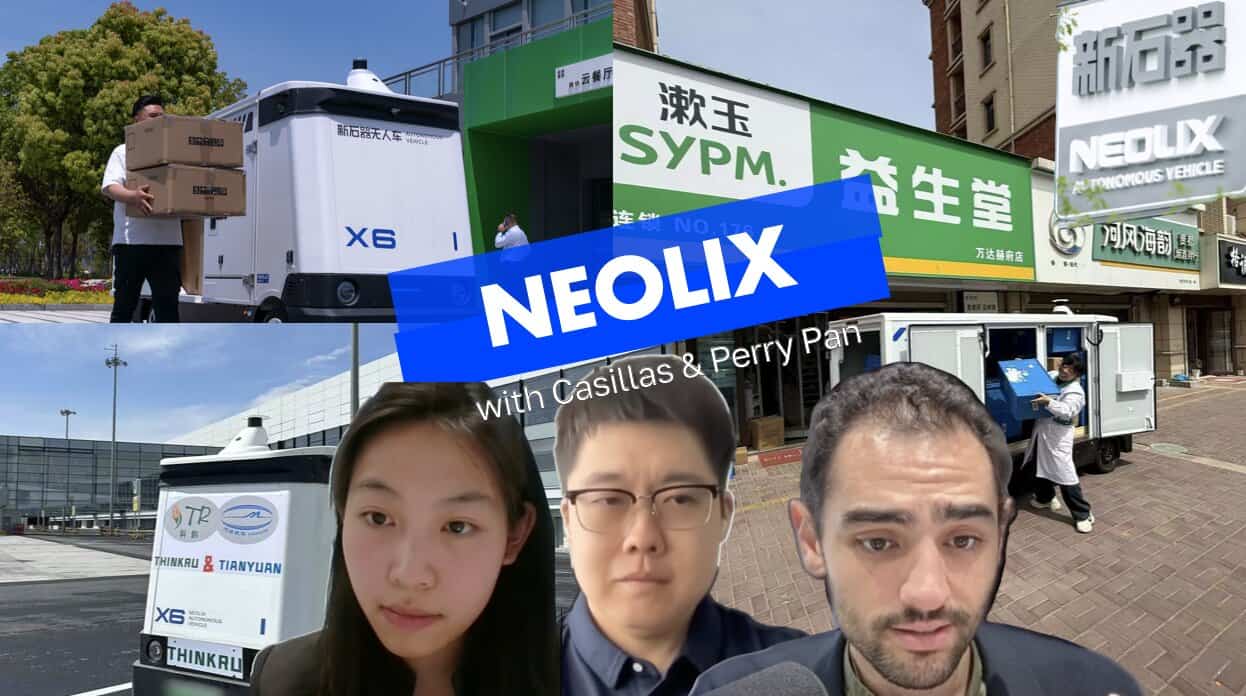
In China, a company has a fleet of over 17,000 delivery vehicles, operating 24/7 in 300+ cities over 15 countries. Its name? NEOLIX! And it is the uncontested champ of autonomous delivery.
As you are reading this, they are currently operating their shuttles for airport luggage transfer, automotive parts delivery, environmental services, inspection, cold chain delivery, express delivery, food delivery, grocery retail, and countless more.
How are they doing? How are they so far ahead? In this episode, I'd like you to meet 2 members of their team: Casillas and Perry.
Perry Pan is the Head of Communication at Neolix — she participated in our call (full version available inside my membership) to give us insights on factory, assembly, and building Neolix.
I have 2 big insights to share in this episode. Again, the full version is available via the Edgeneer's Land membership; which itself is private to Think Autonomous clients and owners of my AV 2 Map (free).
The first insight regards the algorithms used... the second regards the assembly of autonomous delivery vehicles.
Go On:
Insight #1: The "2-Stage" End-To-End Architecture
Just a few years ago, Neolix was operating fewer vehicles, all with a "modular" architecture. As Perry Pan, the head of communication, mentioned to me:
"Previously, our vehicles relied on high-definition maps, and even with in-house mapping capabilities and autonomous vehicles that could collect data themselves, the full process of data collection, map production, and validation typically took around two weeks before a vehicle could go live. With our latest mapless approach, autonomous driving can be achieved using standard navigation data, which significantly shortens deployment time and also helps avoid some of the data sensitivity issues."
This time reduction has been made possible via the move to End-To-End Learning. How did it work? Here is how Casillas describes the transition:

There are several concepts to unpack from this:
- "Early Fusion BEV": Earlier in the interview, Casillas describes how Bird Eye View is the CORE PILLAR that allowed their system to transition from Modular to End-To-End. Without it, E2E would have been impossible. The "early fusion" here describes a "raw data level" fusion process of all cameras and the roof LiDAR. (more on Early Fusion here)
- "OD, Occupancy, Lane Detection": Casillas describes the core 3 Perception tasks that the Neolix driver is solving: object detection, occupancy prediction, and lane detection — all happening in the Bird Eye View space.
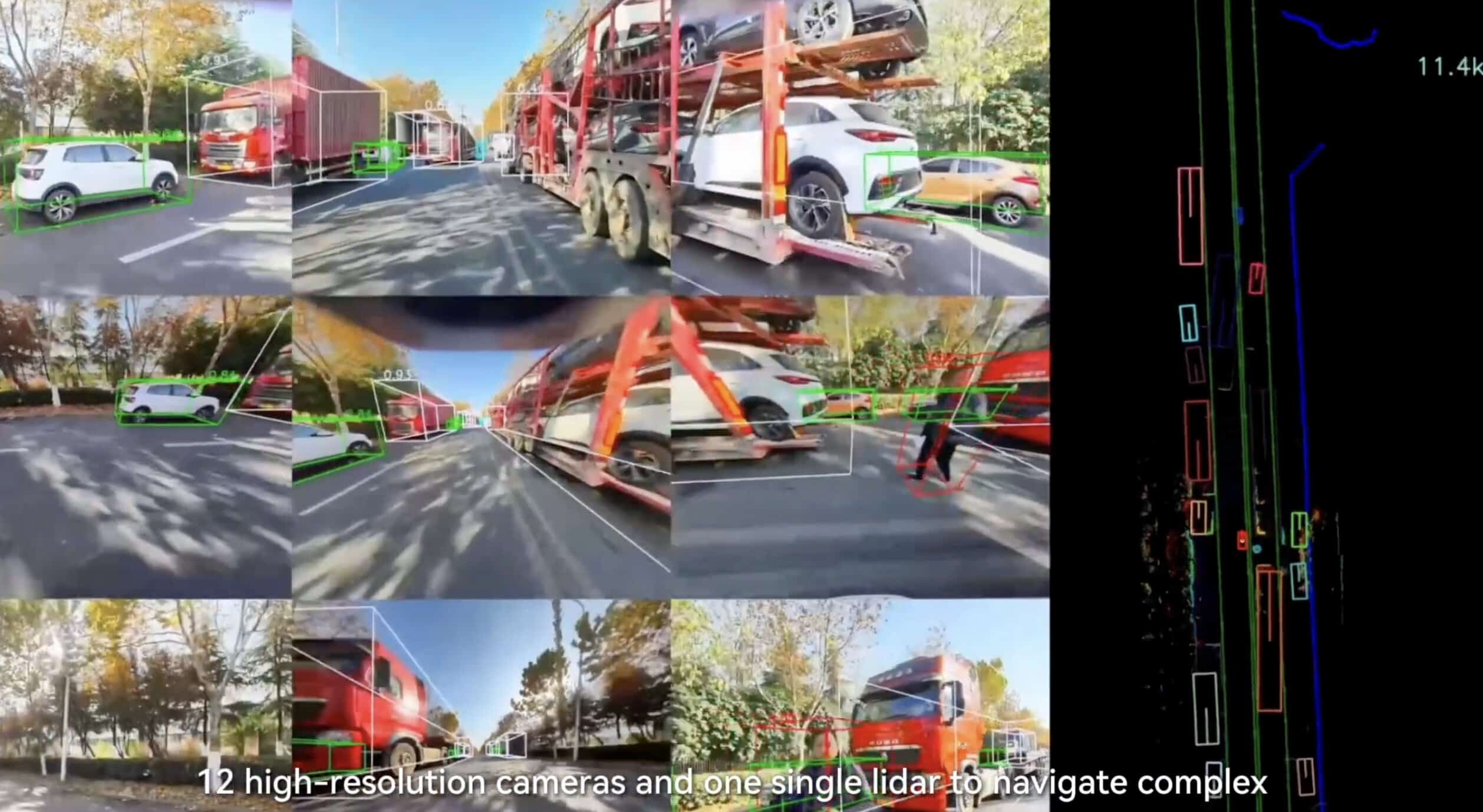
Do you think it's cool? If you want to build an End-To-End Architecture, your Perception system must have these 3 tasks. I'm showing how to fit this into a larger scene in my AV2 map, where I explain exactly how these are used and assembled together.


- "Two Stage End-To-End": Perhaps the most interesting part is Casillas describing the 2-stage end-to-end architecture. Rather than a single network solving autonomous driving, as advertised everywhere, Neolix uses a two-stage approach where:
- Stage 1 = Perception
- Stage 2 = Planning
This modular approach is also what is being done by Autoware and others from the industry who are transitioning to End-To-End.
A very similar transition has been done via Tesla and explained in this article:
 Jeremy Cohen
Insight #2: China's Speed
How much time do you think it takes to assemble a fully-functional vehicle? A month? A week? A day? The answer completely shocked me. Here it is explained by Perry:

When I order a camera or LiDAR sensor from France to any company, whether in Europe, or outside of it, I know I can expect a delivery of a couple weeks. If the process is really fast, it'll take at least 4/5 days. This is just one sensor. If I then want to assemble my autonomous car, I need to get all the parts, and assemble them.
For Neolix, the problem doesn't exist. China IS the place where you can find ALL components in one city... the same way you'd go do your shopping. Because of this, companies like Neolix can design and build an autonomous vehicles in a day.
For Neolix, the time to produce a self-driving car is 10 minutes.
This is absolutely insane. Being in Europe, I know for a fact that this production speed is simply impossible. I remember spending weeks and over a hundred thousand just for a SINGLE car. Neolix assembles a vehicle in 10 minutes at 1/10 of the cost. With this, they use cutting-edge End-To-End algorithms.
With these stats in mind... is there even a remote fighting chance for companies in Europe, who currently BANS self-driving car outside of prototypes and experimentations?
☄️ Go Further: Download the AV2 Map
Interested in Neolix AV 2.0 algorithms? Our AV2 Algorithms Map shows you the 3 algorithms companies like Neolix, but also Tesla, XPeng, and others implement in their End-To-End pipeline. We'll explore them, and also expand to what Nvidia is currently doing with Alpamayo and reasoning.
The AV 2 map is available for free on this page: